
 Travel Guide
Complete Guide to the Statue of Ramses II
The Statue Of Ramses II Represents One Of The Most Powerful And Enduring Symbols Of Ancient Egyptian Royal Authority. Ramses II, Often Referred To As Ramses The Great, Was One Of Egypt’s Longest-Reigning And Most Influential Pharaohs, And His Colossal Statues Were Designed To Project Strength, Divinity, And Eternal Presence Across The Land. Today, The Statue Of Ramses II Continues To Inspire Awe Through Its Monumental Scale, Refined Artistic Style, And Historical Importance. Whether Seen In Memphis, Luxor, Or Cairo, Each Statue Of Ramses II Tells A Story Of Power, Ambition, And Immortality In Stone — Especially When Explored Alongside Legendary Sites Like The Great Pyramids of Giza And The Ancient Capital Of Ancient Memphis Egypt.
This Complete Guide To The Statue Of Ramses II Explores Its Overview, History, Key Features, How To Visit, And Frequently Asked Questions — Offering A Comprehensive Understanding Of One Of Ancient Egypt’s Most Iconic Sculptural Achievements.
Overview
Ramses II Ruled Egypt During The 19th Dynasty In The New Kingdom And Is Widely Regarded As One Of The Greatest Pharaohs In Egyptian History. His Reign Lasted Over 66 Years, Allowing Him To Commission An Extraordinary Number Of Temples, Cities, And Statues Across Egypt And Nubia, And His Legacy Still Connects Naturally With Major Cairo Cultural Stops Such As The Grand Egyptian Museum.
Historical Importance Of Ramses II
The Statue Of Ramses II Is Closely Tied To The Pharaoh’s Political And Religious Vision. Ramses II Used Monumental Sculpture As A Tool To Reinforce His Image As A Warrior King, Divine Ruler, And Protector Of Egypt, With The Same New Kingdom Ideals Still Visible In Sites Like The Valley of the Kings.
The Historical Importance Of Ramses II Includes:
- Leading Military Campaigns Including The Battle Of Kadesh
- Signing One Of The World’s Earliest Known Peace Treaties
- Commissioning Major Temples Such As Abu Simbel
- Promoting Himself As A Living God
Through These Achievements, The Statue Of Ramses II Became A Visual Declaration Of Royal Power And Eternal Rule.
Locations Of His Major Statues (Memphis / Luxor / Cairo)
The Statue Of Ramses II Exists In Several Famous Locations Across Egypt, Each With Its Own Historical Context.
Major Locations Include:
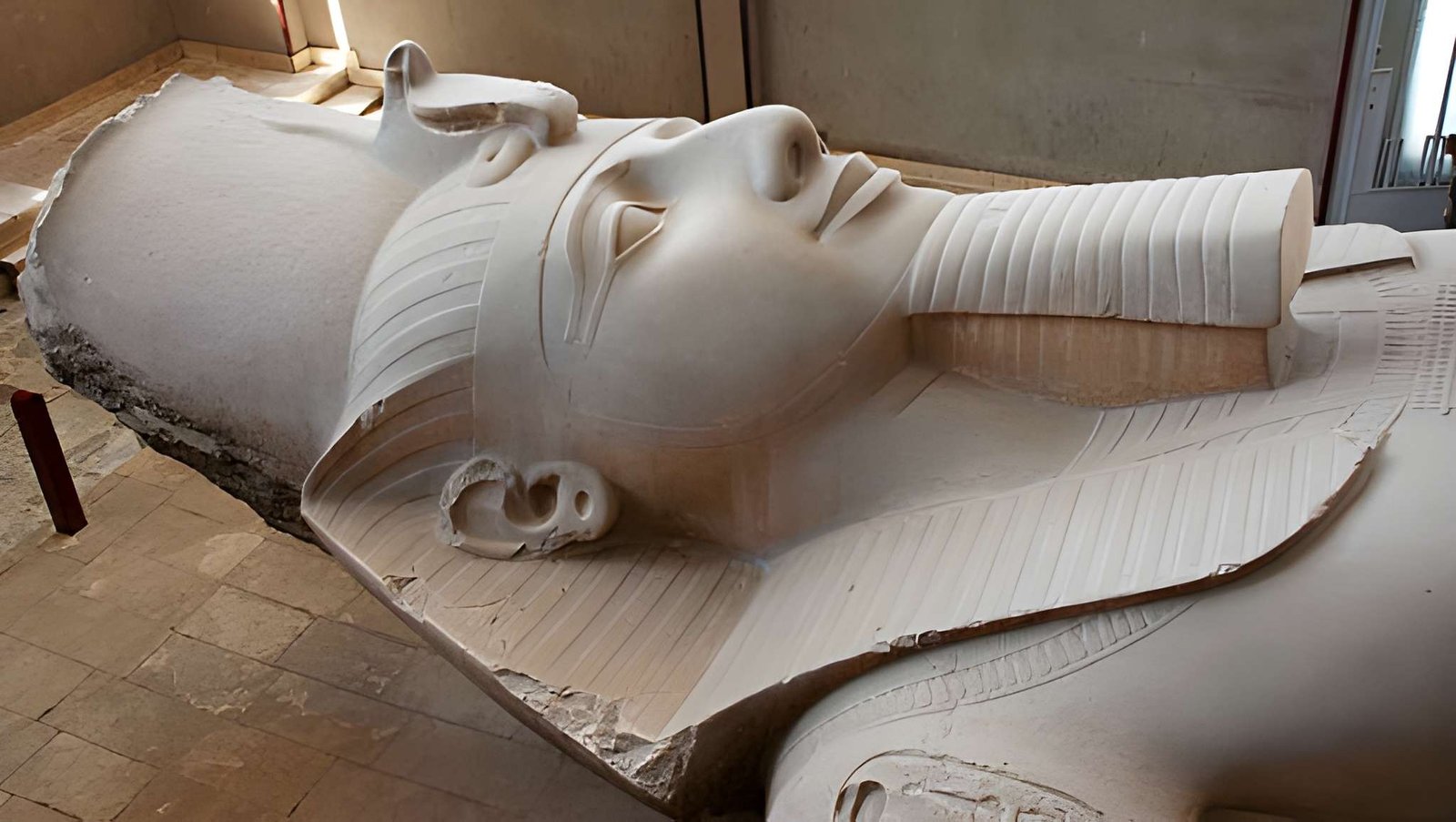
- Memphis – Home To A Colossal Limestone Statue Of Ramses II Displayed In An Open-Air Museum Near The Historic Heart Of Giza Egypt
- Luxor – Multiple Seated And Standing Statues Near Temple Complexes Like Luxor Temple Egypt And Mortuary Landmarks Such As The Temple of Hatshepsut
- Cairo – Modern Museum And Public Displays Reflecting Ramses II’s Enduring Legacy, Often Paired With Visits To The National Museum of Egyptian Civilization
These Locations Demonstrate How The Statue Of Ramses II Continues To Represent Egyptian Heritage From Antiquity To The Present Day.
History
The History Of The Statue Of Ramses II Involves Discovery, Preservation, And Modern Conservation Efforts That Have Ensured Its Survival.
Discovery & Excavation
Many Statues Of Ramses II Were Discovered Over Centuries, Often Buried By Sand Or Collapsed Structures. The Colossal Statue In Memphis, For Example, Was Found Lying On Its Back And Required Careful Excavation To Reveal Its Full Form.
Key Aspects Of Discovery Include:
- Archaeological Excavations In Ancient Capitals
- Identification Through Hieroglyphic Inscriptions
- Recovery Of Fragmented Or Buried Sculptures
- Documentation Of Original Placement
Each Discovery Added New Insight Into Ramses II’s Monumental Building Program.
Restoration Phases
Due To Their Size And Age, Many Statues Of Ramses II Have Undergone Restoration To Protect Them From Environmental Damage And Human Impact.
Restoration Efforts Have Included:
- Structural Stabilization
- Cleaning Of Stone Surfaces
- Controlled Display Environments
- Protective Shelters And Foundations
These Restoration Phases Ensure That The Statue Of Ramses II Remains Accessible To Future Generations While Preserving Its Integrity.
Key Features
The Statue Of Ramses II Is Distinguished By Its Monumental Scale And Artistic Excellence.
Material & Dimensions
Most Statues Of Ramses II Were Carved From Limestone Or Granite, Chosen For Durability And Visual Impact. Some Colossal Statues Reach Lengths Of Over 10 Meters And Weigh Several Tons.
Material And Dimensional Features Include:
- Limestone Or Granite Construction
- Colossal Proportions Emphasizing Power
- Precision Stone Carving
- Durability Across Millennia
The Scale Of The Statue Of Ramses II Was Intended To Inspire Awe And Reinforce Divine Authority, In A Visual Language Also Recognized Through Icons Like The Sphinx Statue.
Artistic Style
The Artistic Style Of The Statue Of Ramses II Reflects The Ideals Of New Kingdom Sculpture — Balance, Strength, And Idealized Youth.
Key Stylistic Elements Include:
- Calm And Confident Facial Expression
- Idealized Muscular Proportions
- Royal Regalia Including Nemes Headdress
- Hieroglyphic Inscriptions Naming The Pharaoh
This Artistic Style Created A Timeless Image Of Eternal Kingship.
How To Visit
Visiting The Statue Of Ramses II Depends On Which Location You Choose To Explore.
Visiting Options Include:
- Memphis Open-Air Museum For The Colossal Statue, Often Included Within Classic Cairo day trip by bus Routes
- Temple Complexes In Luxor Featuring Standing Figures, With Nearby Highlights Such As Colossi of Memnon Luxor
- Museum Displays In Cairo For Easy Access, Ideal For Travelers Choosing A Faster Option Like Cairo day trip by plane
Each Location Offers A Different Perspective On The Statue Of Ramses II And Its Historical Context, And Many Visitors Combine Cairo With Alexandria Via A Cairo and Alexandria 2 day tour For A Broader Historical Experience.
Conclusion
The Statue Of Ramses II Is More Than A Monument — It Is A Declaration Of Power, Belief, And Artistic Mastery That Has Endured For Over Three Millennia. From Its Colossal Scale And Refined Craftsmanship To Its Strategic Placement Across Egypt, The Statue Of Ramses II Reflects A Pharaoh Who Sought Immortality Through Stone. Today, Standing Before A Statue Of Ramses II Is Not Just A Visit To An Ancient Sculpture — It Is A Direct Encounter With One Of History’s Most Influential Rulers And The Civilization He Shaped Forever, Whether You Explore It In Cairo Or Extend Your Journey To Upper Egypt Through A Luxor day trip by plane from Sharm El Sheikh.
FAQs
Is The Statue Of Ramses II Worth Visiting?
It Is One Of The Most Iconic Representations Of Ancient Egyptian Power.
Which Is The Most Famous Statue Of Ramses II?
The Colossal Statue In Memphis Is Among The Most Well-Known.
How Old Is The Statue Of Ramses II?
Approximately 3,200 Years Old.
Can I Photograph The Statue?
Photography Is Generally Allowed Depending On Location.
Is A Guide Recommended?
A Guide Enhances Understanding Of History And Symbolism, Especially When Your Itinerary Includes Major Temple Context Like Luxor Temple Egypt.


Comments are closed